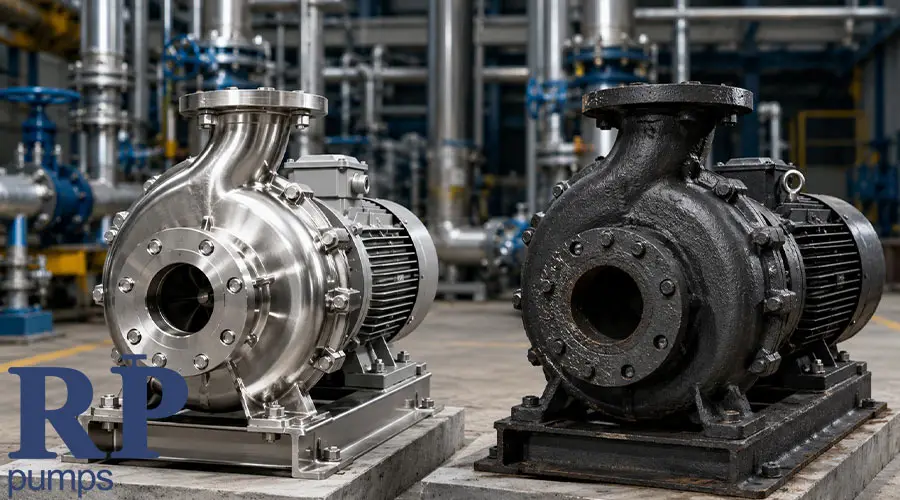
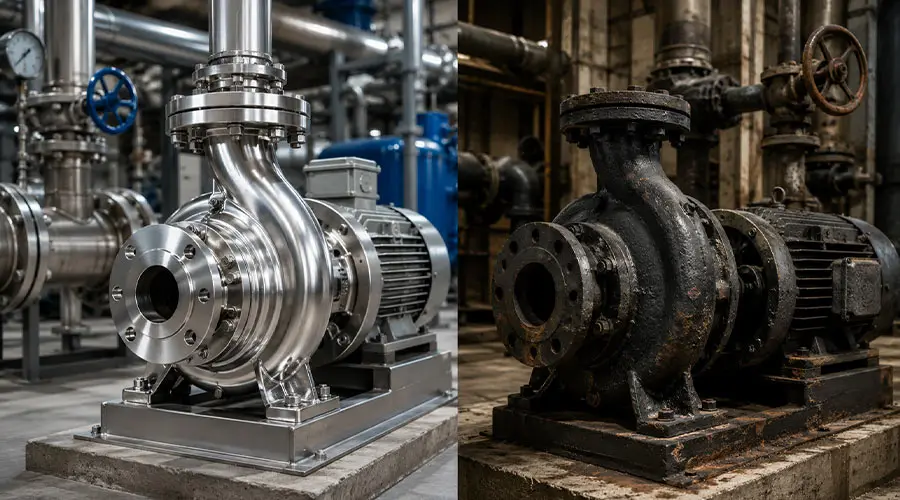
When buying an industrial pump, many people focus on flow rate, pressure, motor power, or price. But one of the most important factors that affects pump lifespan is the material of the pump body and internal components.
Two common options are stainless steel pumps and cast iron pumps. Both are strong and reliable, but they are designed for different working conditions. Choosing the wrong material can lead to corrosion, frequent repairs, reduced performance, and early pump failure.
So, which one lasts longer: stainless steel or cast iron? The answer depends on the liquid being pumped, the environment, and the level of corrosion or wear the pump faces.
Table of Contents
What Are Stainless Steel Pumps?
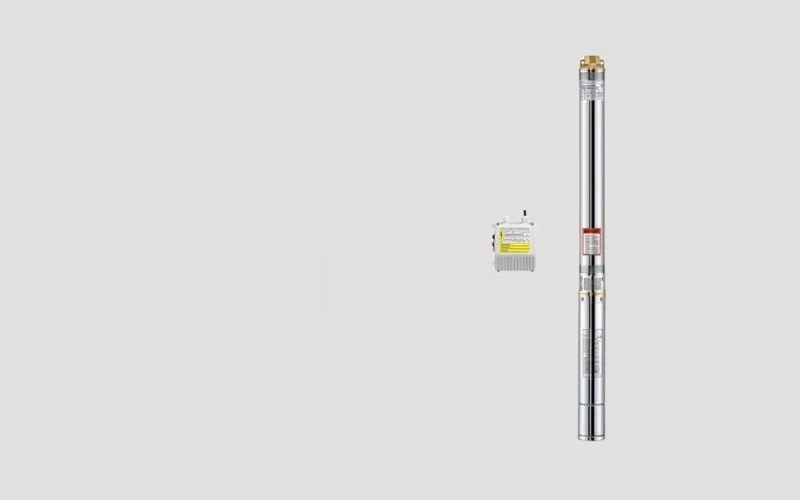
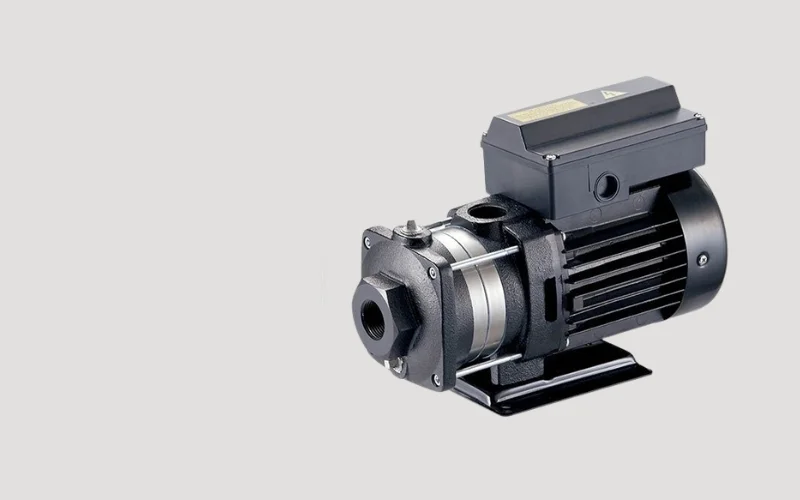
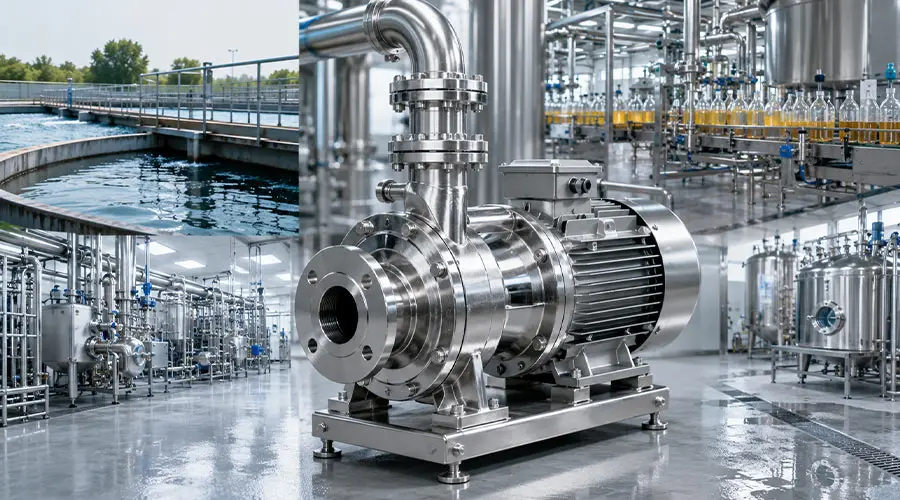
Stainless steel pumps are made with stainless steel parts, especially in areas that come into contact with the liquid. They are known for their high corrosion resistance, clean surface, and long service life in harsh environments.
Stainless steel is often used in industries where liquids may be corrosive or where hygiene is important. These include food processing, chemical transfer, water treatment, pharmaceutical production, marine applications, and industrial wastewater systems.
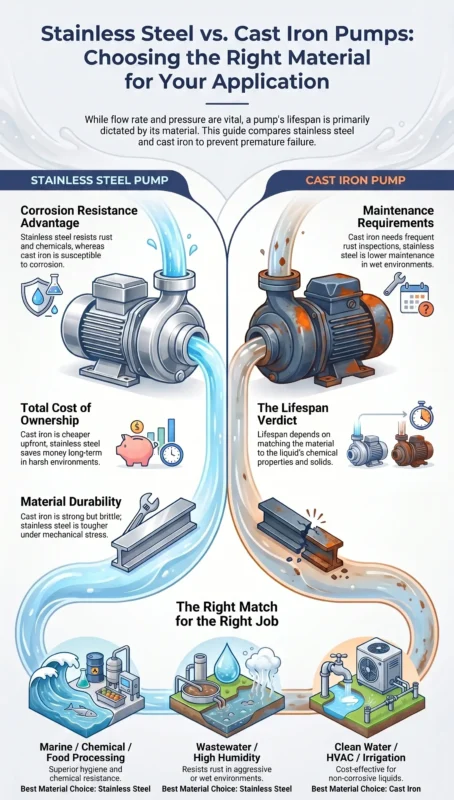
One of the biggest advantages of stainless steel is that it resists rust much better than cast iron. This makes it a better choice for humid environments, outdoor installations, and systems that handle aggressive liquids.
However, stainless steel pumps usually cost more than cast iron pumps. They are a better investment when corrosion resistance and long-term reliability are more important than initial price.
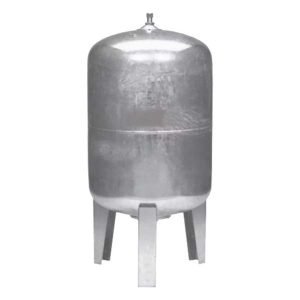
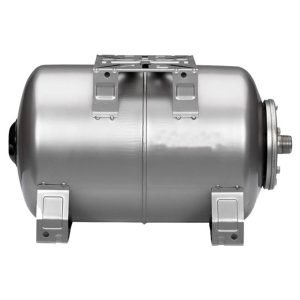
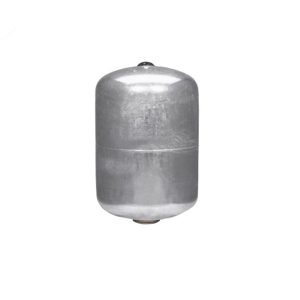
Upgrade your water system with a durable stainless steel pressure tank from RP Pumps Online. Built for corrosion resistance, long-lasting performance, and reliable pressure control.
VAREM 5.3 Gallon Stainless Steel Pressure Tank – 120 Psi – 1″ – 20 psi Pre-Charged
$325.99
What Are Cast Iron Pumps?
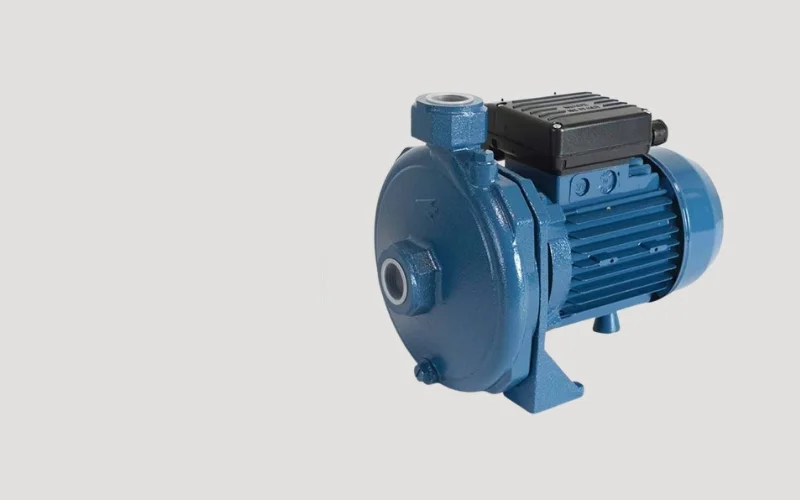
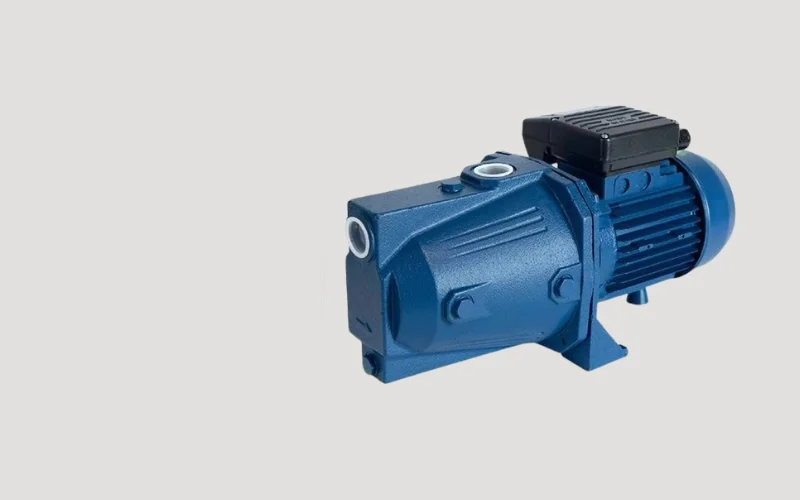
Cast iron pumps are widely used in clean water transfer, irrigation, HVAC systems, booster pumps, drainage, and general industrial applications. Cast iron is strong, durable, and cost-effective, which makes it a popular choice for many pump systems.
In clean and non-corrosive applications, cast iron pumps can last for many years. They are especially useful when the pumped liquid is neutral, stable, and not chemically aggressive.
The main weakness of cast iron is corrosion. If a cast iron pump is used with salty water, acidic liquids, chemicals, or in a constantly wet environment, rust can develop over time. This can reduce efficiency and shorten the pump’s life.
The biggest difference between stainless steel and cast iron pumps is corrosion resistance.
Stainless steel is the better option when the pump handles corrosive liquids, chemicals, saltwater, wastewater, or liquids that may cause rust. It also performs better in outdoor or high-humidity environments.
Cast iron is more suitable for clean water and non-corrosive liquids. If corrosion is not a major concern, a cast iron pump can be a practical and affordable choice.
For example, a cast iron pump may work well in a building water booster system. But for chemical transfer or marine use, stainless steel will usually last longer.
Both stainless steel and cast iron pumps can be durable, but they perform differently. Cast iron has good strength and is suitable for many standard pumping applications. It can handle normal pressure and clean water systems very well. However, cast iron is more brittle and can crack under impact, freezing conditions, or strong mechanical stress.
Stainless steel is usually tougher and more resistant to harsh working conditions. It can handle both moisture and mechanical stress better, especially when corrosion is also a concern. Still, pump lifespan is not only about material. Seals, bearings, impellers, installation quality, and maintenance also play a major role.
Abrasion and Solids
If the liquid contains sand, grit, sludge, or solid particles, the choice becomes more complicated. Stainless steel is better against corrosion, but it is not always the best material for heavy abrasion. Cast iron can also wear down when exposed to abrasive particles.
For applications like slurry, construction dewatering, or heavy wastewater, special wear-resistant materials may be needed. In these cases, the best pump material depends on both the chemical properties and the amount of solids in the liquid.
Cast iron pumps are usually more affordable than stainless steel pumps. For clean water systems, this lower price can make cast iron the better choice. Stainless steel pumps cost more at first, but they can save money in the long run when used in corrosive environments. They may reduce repair costs, downtime, and early replacement.
The best decision should be based on total cost of ownership, not just the purchase price. If the pump works in a mild environment, cast iron may be more economical. If the pump faces corrosion, stainless steel is usually the better long-term investment.
Maintenance Requirements
Cast iron pumps may need more maintenance when there is a risk of rust. Regular inspection is important to check for corrosion, leaks, coating damage, and reduced performance.
Stainless steel pumps usually require less maintenance in corrosive or wet environments, but they still need inspection. Stainless steel is corrosion-resistant, not completely corrosion-proof. The wrong grade or poor operating conditions can still cause damage. For both types, regular maintenance should include checking seals, bearings, vibration, pressure, flow rate, and motor performance.
Best Applications for Stainless Steel Pumps
Stainless steel pumps are best for:
Chemical transfer Food and beverage processing Pharmaceutical systems Water treatment Marine environments Corrosive wastewater Humid or outdoor locations Applications where rust contamination is unacceptable
If the liquid is aggressive or hygiene is important, stainless steel is usually the better option.
Related article: For more information about variable speed pumps, click the link.
Best Applications for Cast Iron Pumps
Cast iron pumps are best for:
Clean water transfer HVAC systems Irrigation Booster systems General drainage Fire protection systems Closed-loop water systems Budget-sensitive projects
If the liquid is clean and non-corrosive, cast iron can provide reliable performance at a lower cost.
Which One Lasts Longer?
In corrosive environments, stainless steel pumps usually last longer. They resist rust, chemicals, moisture, and harsh conditions better than cast iron.
In clean water applications, cast iron pumps can also last many years and may offer better value because of their lower cost.
So the answer is simple:
Stainless steel lasts longer in corrosive or harsh environments. Cast iron lasts long in clean and non-corrosive systems. Special materials may be needed for abrasive liquids with solids.
The longest-lasting pump is always the one that matches the application.
Conclusion
Both stainless steel and cast iron pumps can be reliable, but they are not designed for the same conditions. Stainless steel pumps are better for corrosion resistance, hygiene, chemical handling, and harsh environments. Cast iron pumps are better for clean water, standard industrial use, and lower-cost projects.
If your pump will handle corrosive liquids, saltwater, chemicals, or humid conditions, stainless steel is usually the better long-term choice. If your pump will handle clean water in a controlled environment, cast iron can be durable and cost-effective.
Before choosing, consider the liquid type, corrosion risk, solids, temperature, installation environment, and maintenance needs. The right material will help your pump last longer, perform better, and reduce total operating costs.
FAQs
Which pump lasts longer: stainless steel or cast iron?
Stainless steel pumps usually last longer in corrosive, humid, chemical, or outdoor environments because they resist rust better than cast iron. However, cast iron pumps can also last for many years in clean water and non-corrosive applications.
Are stainless steel pumps better than cast iron pumps?
Stainless steel pumps are better when corrosion resistance, hygiene, and chemical compatibility are important. Cast iron pumps are better for clean water systems, HVAC, irrigation, and budget-sensitive applications where the liquid is not aggressive.
Do cast iron pumps rust?
Yes, cast iron pumps can rust when exposed to moisture, saltwater, acidic liquids, chemicals, or corrosive environments. In clean and controlled water systems, corrosion is usually less of a problem.
When should I choose a stainless steel pump?
You should choose a stainless steel pump for chemical transfer, food and beverage processing, water treatment, marine environments, corrosive wastewater, outdoor use, or any application where rust contamination is unacceptable.
When is a cast iron pump a good choice?
A cast iron pump is a good choice for clean water transfer, irrigation, HVAC circulation, booster systems, drainage, fire protection, and closed-loop water systems where the liquid is non-corrosive.
Are stainless steel pumps worth the higher price?
Yes, stainless steel pumps are often worth the higher price when the pump works in a corrosive or harsh environment. They can reduce repair costs, downtime, and early replacement. For clean water applications, cast iron may offer better value.
Can stainless steel pumps corrode?
Yes, stainless steel can still corrode in certain conditions, especially if the wrong grade is used. Chlorides, stagnant water, high temperatures, and aggressive chemicals can damage some stainless steel materials over time.