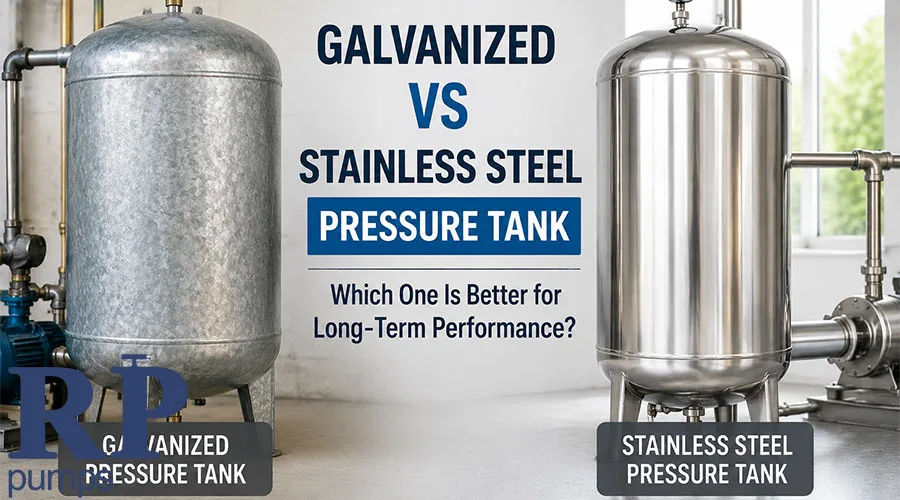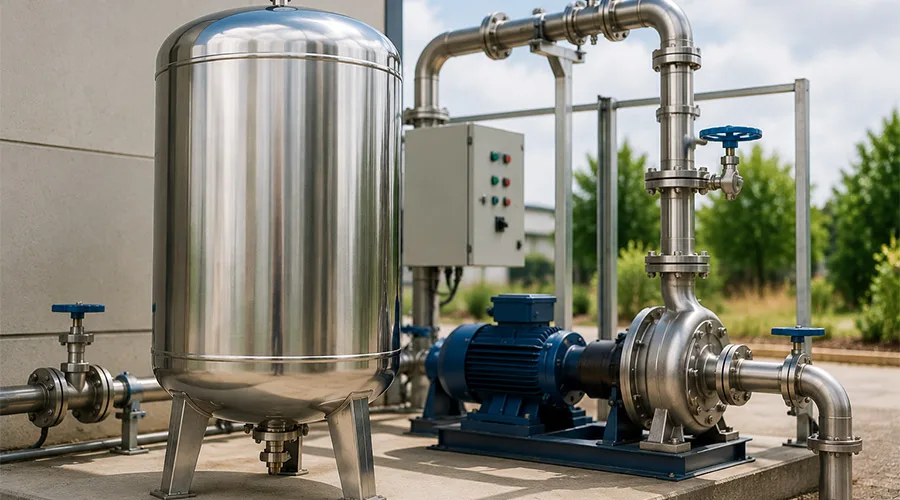
Galvanized vs Stainless Pressure Tank
Pressure tanks are essential components in water supply systems, industrial pumping setups, irrigation networks, and residential booster systems. They regulate pressure, reduce pump cycling, and ensure a stable water flow. However, one of the most important decisions when choosing a pressure tank is the material of construction.
Two of the most common types are galvanized pressure tanks and stainless steel pressure tanks. At first glance, both may seem similar in function, but they differ significantly in durability, corrosion resistance, maintenance needs, and long-term performance.
Understanding the difference between galvanized and stainless steel pressure tanks helps you avoid costly replacements, system failures, and performance inefficiencies. In this article, we will break down both options in detail so you can decide which one is the right fit for your application.
Table of Contents
What Is a Galvanized Pressure Tank?
A galvanized pressure tank is made from carbon steel that has been coated with a layer of zinc through a process called galvanization. The zinc coating acts as a protective barrier against rust and corrosion.
These tanks have been widely used for decades in water storage and pumping systems because they are relatively affordable and strong. In many traditional water supply systems, galvanized tanks were the standard choice before stainless steel became more accessible.
How Galvanization Works
The zinc coating protects the steel in two ways:
- It creates a physical barrier between the steel and moisture.
- It provides sacrificial protection, meaning the zinc corrodes first before the steel underneath.
However, once the zinc layer is damaged or fully consumed, the underlying steel becomes vulnerable to corrosion.
Advantages of Galvanized Pressure Tanks
Galvanized tanks are still used today in many applications due to several benefits:
- Lower initial cost compared to stainless steel
- Strong structural durability
- Suitable for basic water systems
- Readily available in many sizes and configurations
They are often used in rural water systems, irrigation setups, and low-cost pumping installations.
Buy Stainless Steel Pressure Tank Online – RP Pumps
High durability, corrosion resistance, and long-lasting performance for industrial and residential systems.
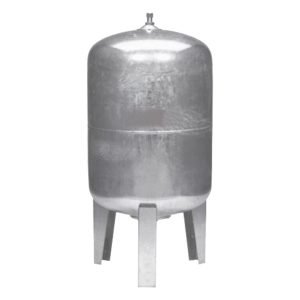
VAREM 26.5 Gallon Stainless Steel Pressure Tank – 120 psi – 1″ – 20 psi Pre-Charged
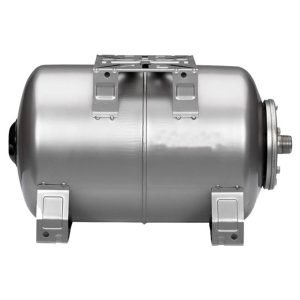
VAREM 13 Gallon Horizontal Stainless Steel Pressure Tank – 120 Psi – 1″ – 20 psi Pre-Charged
VAREM 13 Gallon Stainless Steel Pressure Tank – 120 Psi – 1″ – 20 psi Pre-Charged
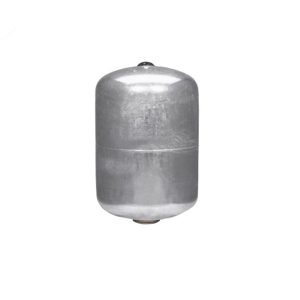
VAREM 5.3 Gallon Stainless Steel Pressure Tank – 120 Psi – 1″ – 20 psi Pre-Charged
What Is a Stainless Steel Pressure Tank?
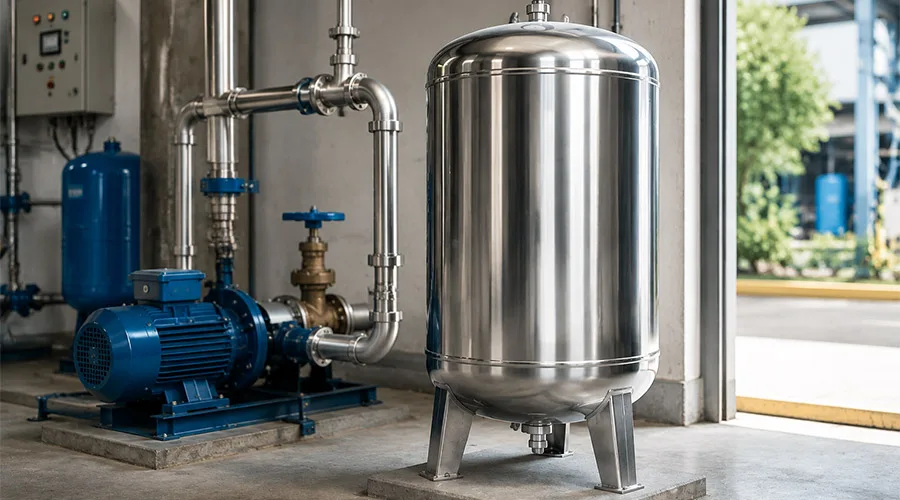
A stainless steel pressure tank is made from alloy steel containing chromium, which provides natural corrosion resistance throughout the material, not just on the surface.
Unlike galvanized tanks, stainless steel does not rely on a coating. Instead, it forms a self-healing protective layer of chromium oxide that prevents rust from spreading.
Why Stainless Steel Is Different
The biggest difference is that stainless steel is inherently corrosion-resistant, meaning even if the surface is scratched, it still resists rust formation.
This makes stainless steel pressure tanks ideal for demanding environments where water quality, humidity, or chemical exposure may be a concern.
Advantages of Stainless Steel Pressure Tanks
Stainless steel tanks offer several long-term benefits:
- Excellent corrosion resistance
- Longer service life
- Better hygiene for potable water
- Lower maintenance requirements
- Higher resistance to pressure fluctuations and environmental stress
They are commonly used in industrial water systems, food processing plants, marine environments, and high-performance pumping systems.
Related article: For more information about best water pump for home, click the link.
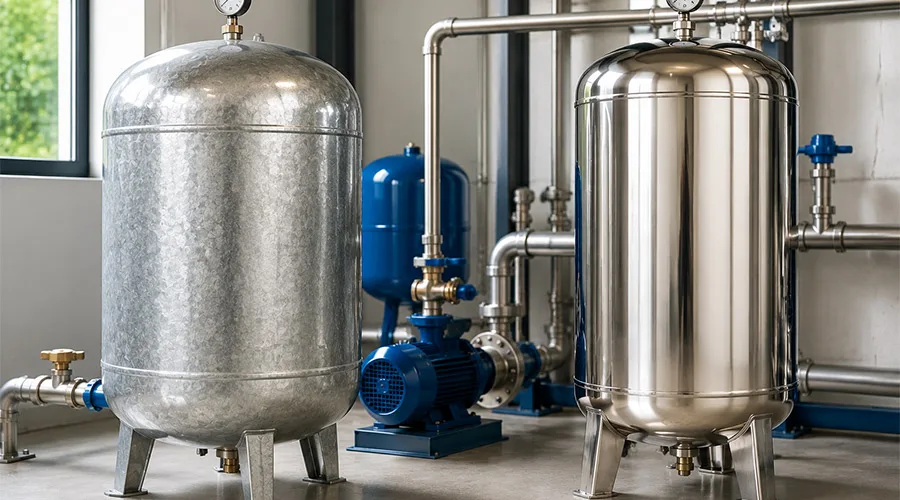
Galvanized vs Stainless Steel Pressure Tank Comparison
Below is a clear side-by-side comparison:
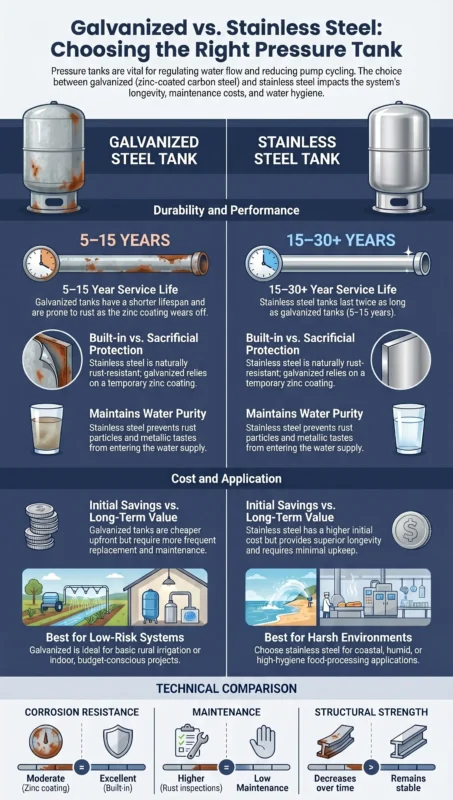
Feature | Galvanized Pressure Tank | Stainless Steel Pressure Tank |
Corrosion Resistance | Moderate (depends on zinc coating) | Excellent (built-in resistance) |
Lifespan | 5–15 years | 15–30+ years |
Maintenance Needs | Higher (rust inspection required) | Low maintenance |
Initial Cost | Lower | Higher |
Water Quality Impact | May introduce rust particles over time | Maintains clean water quality |
Strength Over Time | Decreases due to corrosion | Remains stable |
Best Environment | Mild, non-corrosive conditions | Harsh, humid, or industrial environments |
Hygiene Level | Medium | High (food-grade applications) |
Long-Term Value | Lower | Higher |

Corrosion Resistance: The Most Important Difference
When comparing galvanized vs stainless steel pressure tanks, corrosion resistance is the most critical factor.
Galvanized tanks rely on their zinc coating. Over time, this coating gradually wears down, especially in environments with:
- Hard water
- High humidity
- Chemical exposure
- Saltwater or coastal air
Once the zinc layer is compromised, rust begins forming on the steel underneath. This can significantly shorten the tank’s lifespan.
Stainless steel, on the other hand, resists corrosion throughout its structure. Even in aggressive environments, it maintains integrity for much longer periods.
In real-world applications, stainless steel tanks often outlast galvanized tanks by several years, especially in challenging water conditions.
Related article: For more information about agricultural water pumps, click the link.

Durability and Structural Strength
Both galvanized and stainless steel tanks are structurally strong, but their long-term durability differs. Galvanized tanks are strong initially, but their structural integrity decreases as corrosion develops internally. Rust buildup can weaken the tank walls and eventually lead to leaks or failures.
Stainless steel tanks maintain structural strength over time because they do not degrade internally due to rust. This makes them more reliable for long-term continuous operation.
Additionally, stainless steel handles pressure fluctuations more effectively, which is important in systems with variable pump cycles or industrial demand changes.
Hygiene and Water Quality
Water quality is another important factor when selecting a pressure tank.
Galvanized tanks may gradually affect water quality as corrosion develops inside the tank. Rust particles can enter the water system, leading to discoloration, metallic taste, and potential contamination.
Stainless steel tanks are widely used in applications where water purity is essential. Because they do not corrode or leach materials into the water, they maintain higher hygiene standards.
This makes stainless steel the preferred choice for:
- Drinking water systems
- Food and beverage processing
- Pharmaceutical production
- Medical facilities
If water safety is a priority, stainless steel is the superior option.
Related article: For more information about how to remove water pump, click the link.
Maintenance Requirements
Maintenance is another major difference between the two tank types.
Galvanized pressure tanks require regular inspection for:
- Internal rust formation
- Coating deterioration
- Sediment buildup
- Leakage around weak points
Over time, maintenance costs can increase as corrosion progresses.
Stainless steel tanks require significantly less maintenance. Since they do not rust easily, routine inspection is usually sufficient to ensure proper operation. This reduces downtime and long-term servicing costs.
Cost Comparison
Cost is often the deciding factor for many buyers.
Galvanized pressure tanks are generally cheaper upfront. This makes them attractive for budget-conscious projects or temporary installations.
However, stainless steel tanks are more expensive initially but offer better long-term value due to:
- Longer lifespan
- Reduced maintenance
- Fewer replacements
- Better performance stability
When evaluating cost, it is important to consider total cost of ownership, not just purchase price. In many cases, stainless steel becomes more cost-effective over time.

Environmental Suitability
Different environments affect tank performance significantly.
Galvanized Tanks Perform Best In:
- Clean, non-corrosive water systems
- Indoor installations
- Short to medium-term use
- Low humidity environments
Stainless Steel Tanks Perform Best In:
- Outdoor and humid environments
- Coastal or salty air conditions
- Industrial systems
- Chemical or variable water quality environments
If the installation environment is harsh or unpredictable, stainless steel is the safer choice.
Lifespan Comparison
The lifespan difference between galvanized and stainless steel pressure tanks is significant.
- Galvanized tanks typically last 5 to 15 years, depending on conditions
- Stainless steel tanks can last 15 to 30+ years with proper maintenance
This difference is mainly due to corrosion resistance. Once galvanized coating fails, degradation accelerates quickly, while stainless steel maintains long-term stability.
Common Applications
Galvanized Pressure Tanks Are Commonly Used In:
- Rural water supply systems
- Agricultural irrigation
- Low-cost residential systems
- Temporary pumping installations
Stainless Steel Pressure Tanks Are Commonly Used In:
- Industrial pumping systems
- Commercial buildings
- High-rise water booster systems
- Food and beverage processing
- Water treatment plants
- Marine and coastal systems
Choosing the correct application type ensures optimal performance and reliability.

Which One Should You Choose?
The choice between galvanized and stainless steel pressure tanks depends on your specific needs.
Choose a galvanized pressure tank if:
- You have a limited budget
- The system is low-risk and non-critical
- Water quality is stable and non-corrosive
- You need a short- to medium-term solution
Choose a stainless steel pressure tank if:
- You want long-term durability
- Corrosion resistance is important
- Water quality must remain clean
- The system operates in harsh environments
- You want lower maintenance costs over time
Conclusion
Both galvanized and stainless steel pressure tanks serve important roles in water and pumping systems, but they are designed for different performance expectations.
Galvanized tanks are cost-effective and suitable for basic applications, especially where environmental conditions are mild and budget is a key concern. However, their lifespan is limited by corrosion once the protective zinc layer begins to degrade.
Stainless steel tanks, on the other hand, offer superior durability, corrosion resistance, and long-term reliability. While they require a higher initial investment, they provide better value over time due to reduced maintenance and longer service life.
Ultimately, the best choice depends on your application, water quality, and long-term performance requirements. If reliability and longevity are your priorities, stainless steel is the clear winner.
FAQs
What is the main difference between galvanized and stainless steel pressure tanks?
The main difference is corrosion protection. Galvanized tanks rely on a zinc coating that can wear off over time, while stainless steel tanks have built-in corrosion resistance throughout the material, making them more durable in the long run.
Which pressure tank lasts longer?
Stainless steel pressure tanks generally last longer. They can operate for 15–30+ years, while galvanized tanks usually last around 5–15 years depending on water quality and environmental conditions.
Are galvanized pressure tanks still a good choice?
Yes, galvanized tanks are still a good option for low-cost projects, clean water systems, and short to medium-term use where corrosion risk is low.
Is stainless steel worth the higher cost?
In most cases, yes. Stainless steel tanks offer lower maintenance, longer lifespan, and better water quality, which makes them more cost-effective over time despite higher initial price.
Do galvanized tanks rust inside?
Yes. Once the zinc coating wears down, galvanized tanks can begin to rust internally, especially when exposed to hard water, humidity, or poor maintenance conditions.
Are stainless steel pressure tanks completely rust-proof?
Not completely, but they are highly corrosion-resistant. In normal operating conditions, stainless steel resists rust much better than galvanized steel and maintains structural integrity for a long time.