water pumps

High-Flow Pool Pumps: The Hidden Engine Behind Crystal-Clear Water

Introduction

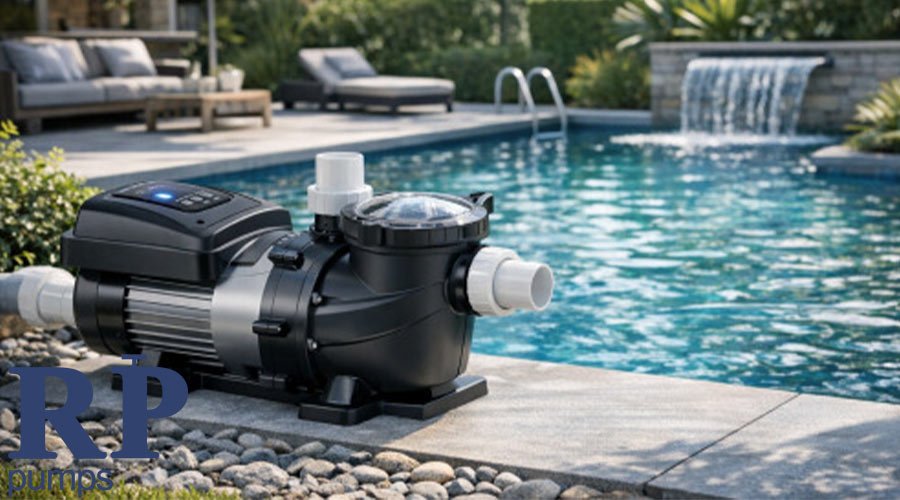
Behind every stunning swimming pool—whether in a luxury resort or a modern residential villa—there is a powerful system working silently in the background. At the center of this system is the high-flow pool pump, the true engine that keeps water clean, safe, and visually appealing.

Without proper circulation, even the most beautiful pool can quickly become cloudy, unhygienic, and unusable. High-flow pool pumps are specifically engineered to handle large volumes of water efficiently, ensuring optimal performance in demanding environments.


Why High-Flow Pool Pumps Matter

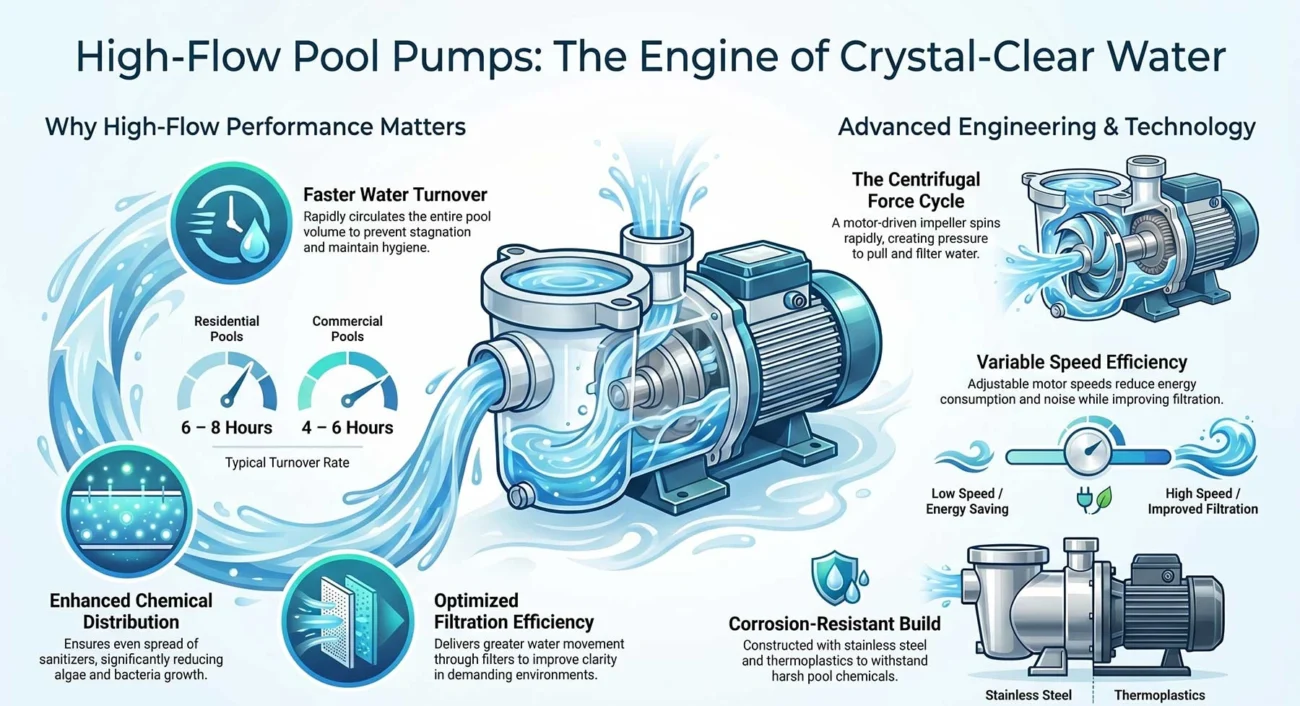
A pool pump is responsible for moving water through the entire circulation system, including filters, heaters, and sanitation equipment. This continuous movement prevents stagnation and maintains water clarity.

In large or commercial pools, standard pumps often struggle to maintain adequate flow rates. High-flow pumps solve this problem by delivering greater water movement while maintaining efficiency and reliability.

Key benefits include:

  • Faster water circulation
  • Improved filtration performance
  • Better chemical distribution
  • Reduced risk of algae and bacteria growth

Understanding Pool Turnover Rate

One of the most important concepts in pool system design is the turnover rate—the time required to circulate the entire volume of pool water through the filtration system.

For example:

  • Residential pools: typically 6–8 hours
  • Commercial pools: often 4–6 hours or less

Achieving these targets requires a pump capable of overcoming resistance from filters, pipes, and fittings. If the pump is undersized, water quality quickly deteriorates.

High-flow pool pumps are designed to maintain consistent performance even under high pressure and heavy system loads.


How High-Flow Pool Pumps Work

Most pool pumps operate using centrifugal force. Inside the pump:

  1. The motor drives an impeller
  2. The impeller spins rapidly, increasing water velocity
  3. Water is pushed outward, creating pressure
  4. This pressure moves water through the filtration system

This process creates a continuous loop:

  • Water is pulled from the pool
  • Debris is filtered out
  • Clean water is returned back

This constant circulation is essential for maintaining safe and clean pool conditions.


Engineering for High Performance and Low Noise

One of the biggest challenges in pool system design is balancing power and noise. Traditional pumps can produce vibrations and loud mechanical sounds, which are unacceptable in luxury environments.

Modern high-flow pumps address this by:

  • Using precision-balanced impellers
  • Reducing internal turbulence
  • Incorporing vibration-dampening structures
  • Optimizing hydraulic pathways

The result is a powerful yet quiet system that operates efficiently without disturbing the surrounding environment.


Built to Resist Harsh Pool Conditions

Pool water contains chemicals like chlorine, salt, and acids that can damage standard materials over time. High-quality pumps are built with:

  • Corrosion-resistant thermoplastics
  • Stainless steel components
  • Durable seals and shafts

These materials ensure long-term durability, even in aggressive chemical environments, reducing maintenance costs and downtime.


The Rise of Variable Speed Technology

Energy efficiency is a major concern for pool owners and facility managers. Traditional single-speed pumps operate at full power, consuming unnecessary energy.

Variable speed pool pumps offer a smarter solution:

  • Adjustable motor speeds based on demand
  • Lower energy consumption
  • Reduced noise levels
  • Improved filtration efficiency

Running a pump at lower speeds for longer periods can significantly reduce electricity costs while improving overall water quality.


Dedicated Systems for Advanced Features

Modern pools often include additional features such as:

  • Spa jets
  • Waterfalls
  • Decorative fountains

These require different hydraulic characteristics compared to standard filtration. High-flow pumps are often paired with booster pumps to ensure both filtration and water features perform optimally without compromise.


Conclusion

High-flow pool pumps are far more than just mechanical equipment—they are the backbone of any efficient and high-quality pool system. From maintaining water clarity to ensuring energy efficiency and quiet operation, they play a critical role in delivering a superior swimming experience.

Investing in the right pump means:

  • Cleaner water
  • Lower operating costs
  • Longer equipment lifespan
  • Better user satisfaction

For any pool system—residential or commercial—choosing a high-performance pump is not just an upgrade; it’s a necessity.


Leave a Reply

Your email address will not be published. Required fields are marked *