Cavitation is one of the most common—and destructive—problems affecting centrifugal pumps. It often begins silently, but if left undetected, cavitation can cause severe damage to impellers, bearings, seals, and even the pump casing itself. For industries that rely on consistent pump performance, early detection of cavitation is critical to avoiding costly downtime and repairs.
At RP Pumps, we emphasize proactive pump monitoring and proper system design to help customers extend equipment life. In this article, we’ll explain how cavitation occurs, the early warning signs to watch for, and how you can stop it before permanent damage sets in.
Cavitation occurs when the pressure of a liquid drops below its vapor pressure, causing vapor bubbles to form within the pump—most commonly near the impeller eye. As the liquid moves into higher-pressure zones, these bubbles collapse rapidly, releasing intense localized energy.
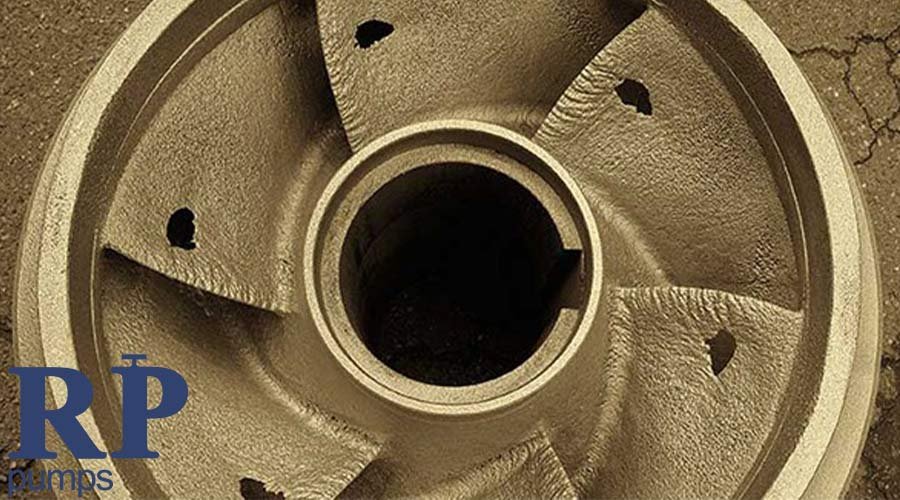
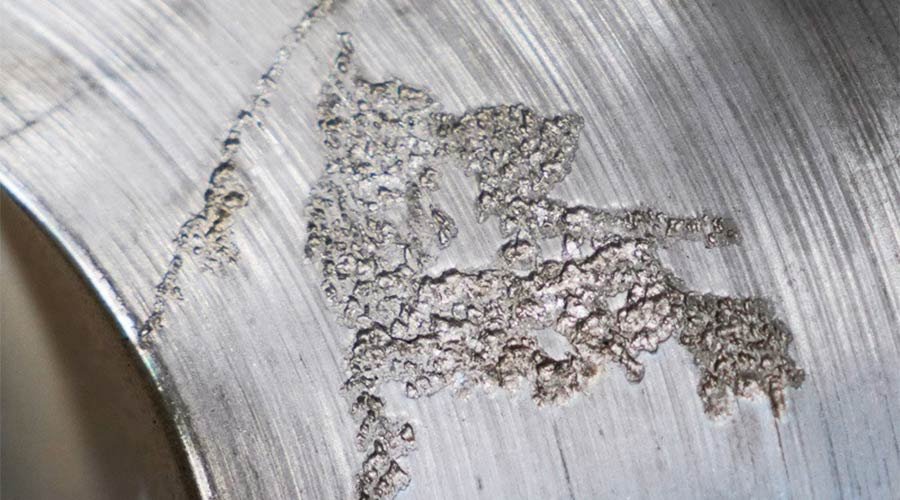
This repeated bubble collapse creates micro-shock waves that strike internal pump surfaces. Over time, these impacts erode metal components, especially impellers and wear rings. The damage often appears as pitting, cracking, or a rough, sponge-like surface texture.
Beyond physical damage, cavitation reduces hydraulic efficiency. Flow becomes unstable, energy consumption increases, and mechanical components such as bearings and seals experience higher stress. If left unchecked, cavitation can lead to total pump failure and unplanned shutdowns.
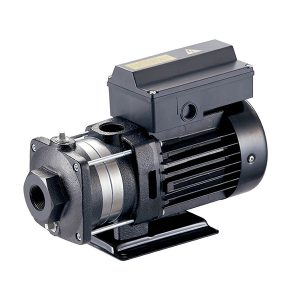
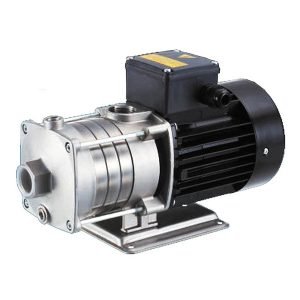
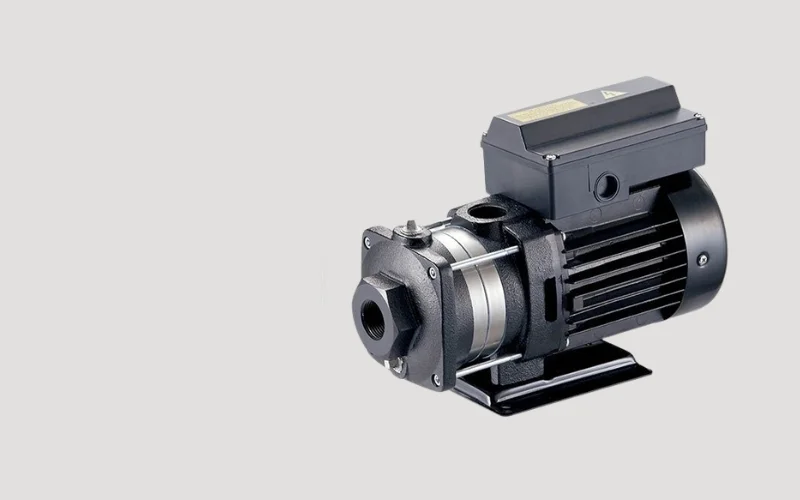
High-performance centrifugal water pump engineered for efficiency, durability, and smooth operation. Trust RP Pumps for reliable flow solutions that keep your systems running nonstop.
CBI 4-20 Multi-Stage Horizontal Water Pump - 2400 GPH, 1 HP, 220/460 Volts, 1 1/4 in. Suction, 3P
$606.99
Unusual Noise: The First Audible Warning Sign
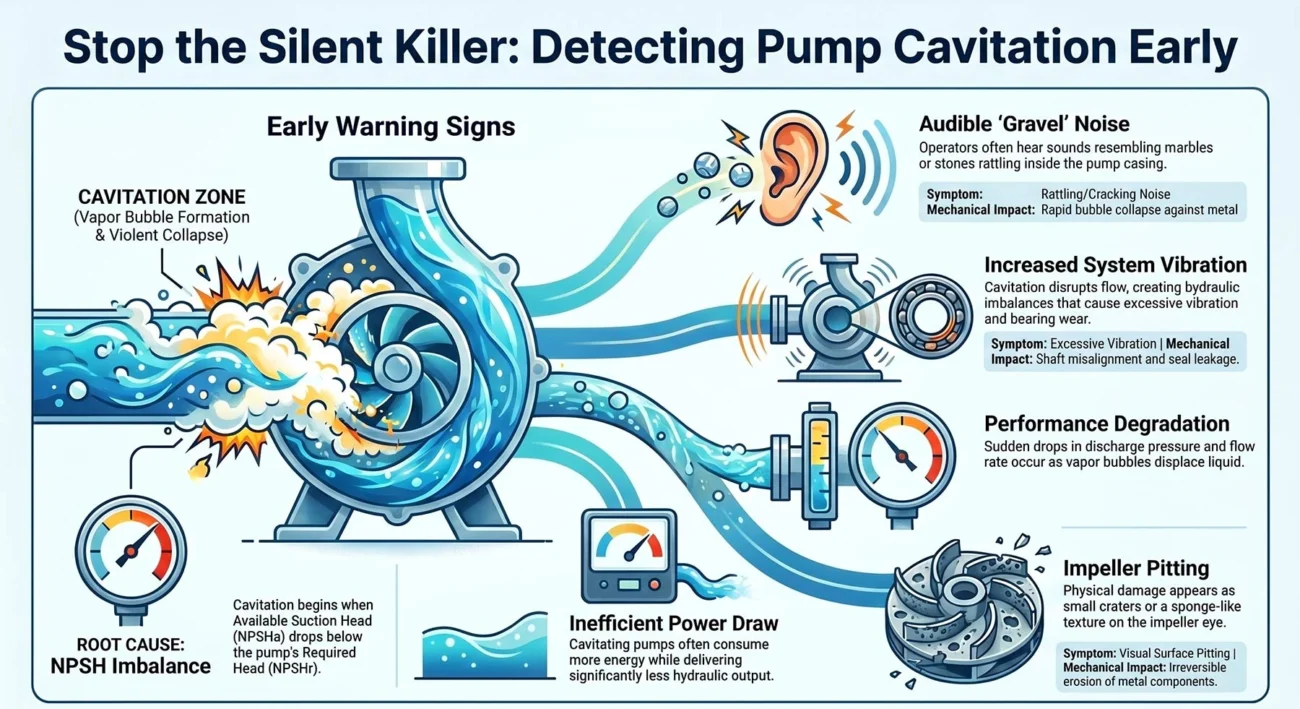
One of the earliest and most noticeable symptoms of cavitation is abnormal noise. Operators often describe the sound as gravel, marbles, or stones rattling inside the pump casing. This noise is caused by vapor bubbles collapsing against metal surfaces.
Unlike normal operational noise, cavitation sounds tend to fluctuate with changes in flow rate, suction conditions, or system demand. The noise may intensify during peak operation or when valves are partially closed, making it easier to detect during load variations.
Ignoring these sounds can be costly. Early acoustic warnings provide a valuable opportunity to address suction pressure, system layout, or operating speed before internal components suffer irreversible damage.
Cavitation disrupts smooth liquid flow through the pump, creating uneven hydraulic forces on the impeller. This imbalance leads to increased vibration throughout the pump and connected piping system.
Excessive vibration accelerates mechanical wear, causing premature bearing failure, seal leakage, and coupling damage. Over time, vibration can loosen mounting bolts and misalign shafts, compounding maintenance issues beyond the pump itself.
Regular vibration analysis is one of the most effective predictive maintenance tools for detecting cavitation early. Sudden or unexplained increases in vibration levels should always prompt further investigation of suction conditions and operating parameters.
As cavitation intensifies, pump performance begins to degrade. Vapor bubbles occupy space that should be filled with liquid, reducing the pump’s ability to generate consistent pressure and flow.
Operators may notice reduced discharge pressure, fluctuating flow rates, or an inability to meet system demand—even though the pump is running at normal speed. In some cases, cavitating pumps draw more power while delivering less output, increasing operating costs.
Comparing real-time performance data to the pump’s original performance curve is essential. Persistent deviations often indicate cavitation or other hydraulic issues that require immediate correction.
Visual Inspection: What to Look for During Maintenance
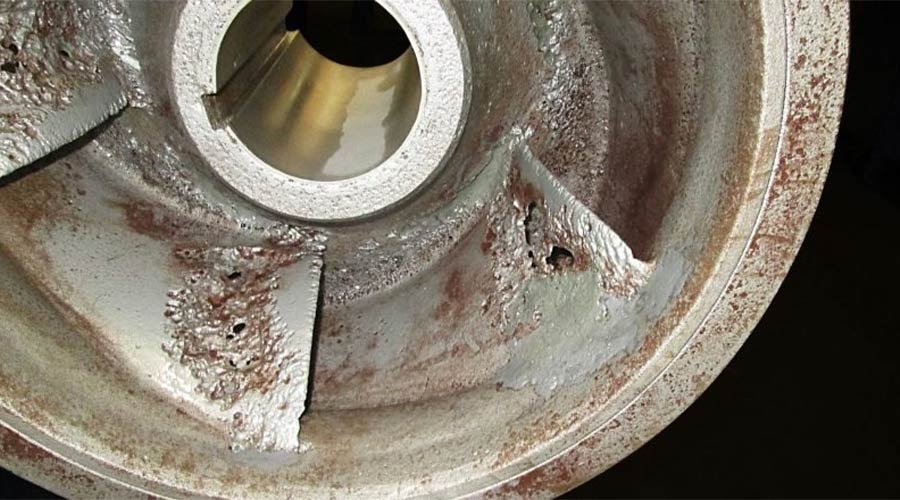
Although cavitation begins internally, its effects become visible during routine inspections. The most common damage appears on the impeller, particularly near the eye, where pressure is lowest.
Cavitation damage often looks like small pits or craters in the metal surface. In advanced cases, the metal may appear rough or brittle, resembling corrosion—even when the fluid itself is non-corrosive.
It is important to note that replacing damaged components without addressing the root cause will not solve the problem. Visual damage confirms cavitation has already progressed and system conditions must be corrected to prevent recurrence.
Cavitation is the formation and accumulation of bubbles around a pump impeller. This tends to form in liquids of any viscosity as they are being transported through and around a pump system. When each of these tiny bubbles collapses or bursts, it creates a high energy shock wave inside the liquid.
Suction Conditions and NPSH Issues
Poor suction conditions are the leading cause of cavitation. When the available Net Positive Suction Head (NPSHa) is lower than what the pump requires (NPSHr), vapor bubbles form inside the pump.
Common contributors include undersized suction piping, clogged strainers, excessive fluid temperature, long suction lines, or high pump speed. Even small design oversights can significantly increase cavitation risk.
Ensuring adequate suction pressure, minimizing piping losses, and selecting the correct pump for the application are essential preventive measures. Proper system evaluation during installation is far more cost-effective than repairing cavitation damage later.
Conclusion
Cavitation is rarely a sudden failure—it is a gradual process that provides multiple warning signs before serious damage occurs. Noise, vibration, performance loss, and visual wear all signal that corrective action is needed.
By responding early, operators can adjust operating conditions, improve suction design, or select a more suitable pump configuration. These proactive steps significantly extend equipment life and improve system reliability.
RP Pumps supports customers with expert pump selection, system analysis, and technical guidance to minimize cavitation risks. Detecting cavitation early is not just good maintenance practice—it is a critical investment in long-term operational efficiency.
FAQs
What are the earliest signs of cavitation in a pump?
The earliest signs of cavitation typically include unusual noise, increased vibration, and unstable pump performance. Operators often notice a rattling or crackling sound similar to gravel inside the pump. These symptoms usually appear before visible damage occurs, making early detection critical.
Can cavitation damage a pump permanently?
Yes, cavitation can cause permanent damage if it continues unchecked. Repeated bubble collapse erodes metal surfaces, leading to pitting, cracking, and material loss. Over time, this damage can result in impeller failure, seal leaks, bearing damage, and complete pump breakdown.
What causes cavitation in centrifugal pumps?
Cavitation in centrifugal pumps is most commonly caused by insufficient suction pressure or inadequate Net Positive Suction Head (NPSH). Other contributing factors include high fluid temperature, blocked or undersized suction piping, excessive pump speed, and operating the pump far from its design point.