
water pumps

How to Read Pump Specifications Like a Pro

How to Read Pump Specifications Like a Pro
Choosing the right pump for your system is more than just picking one that looks powerful — it’s about understanding the numbers and terms behind its performance. Pump specifications tell you exactly how a pump will perform under certain conditions, helping you make informed decisions for efficiency, longevity, and cost savings. Whether you’re buying a new pump, replacing an old one, or troubleshooting system performance, learning how to interpret pump specs can save time, money, and headaches.

In this guide, we’ll break down the key specifications you’ll see on pump datasheets, explain what they mean, and show you how to apply that knowledge like a pro.

This article examines the following topics:

1. Understanding Flow Rate — The Heart of Pump Performance

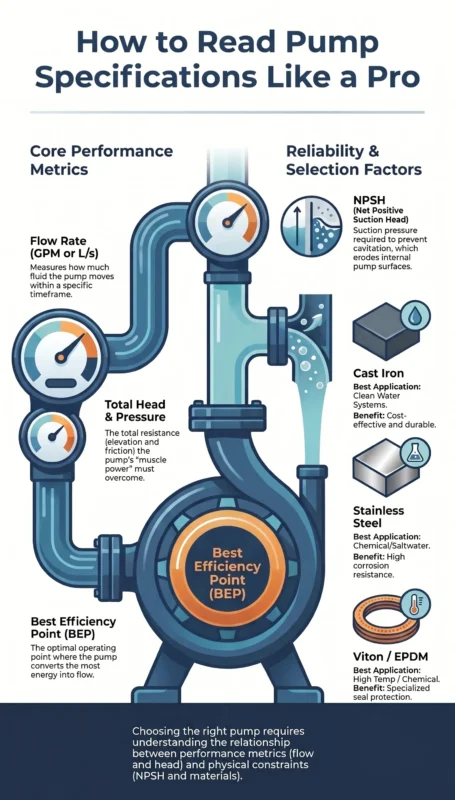
Flow rate, often measured in gallons per minute (GPM) or liters per second (L/s), represents how much fluid the pump can move in a given time. A higher flow rate doesn’t always mean better — it depends on your system’s requirements. Too much flow can cause turbulence and energy waste, while too little may result in poor system performance.

When reading a pump’s flow rate, pay attention to the conditions under which it was measured. Some manufacturers list flow rates at free discharge (no head pressure), while others specify it at a given total head. Matching your system’s flow demand with the correct flow rate ensures smooth operation and optimal energy usage.

Understanding this spec helps you avoid common mistakes like oversizing, which leads to higher power consumption and unnecessary wear, or undersizing, which causes poor output and frequent breakdowns.

2. Total Head and Pressure — Knowing Your Pump’s Strength

The total head (measured in meters or feet) is one of the most critical specs on any pump. It represents the height or pressure the pump can push water against gravity and system resistance. Think of it as the pump’s “muscle power.”

This value includes static head (vertical lift), friction losses in pipes, and any additional system pressure requirements. If your pump can’t meet the total head needed by your system, it won’t deliver the expected flow rate — no matter how powerful the motor appears.

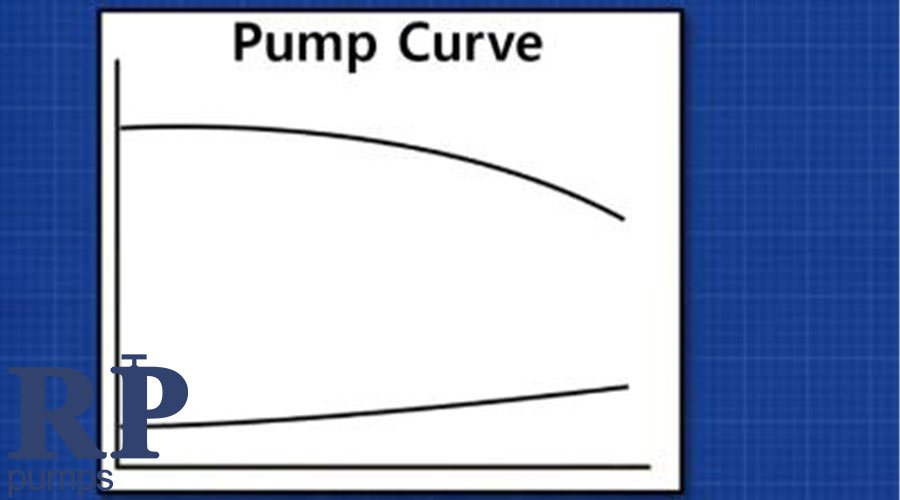
Professional installers always compare the pump curve (a graph showing flow vs. head) with their system’s demand curve to find the best operating point. Mastering this relationship ensures your pump works efficiently without overloading or underperforming.

Related article: For more information about most energy efficient water pump, click the link.

Pump Specifications

3. Power and Efficiency — Balancing Energy and Performance

Every pump motor has a power rating, usually expressed in horsepower (HP) or kilowatts (kW). This rating shows how much electrical energy the motor can deliver to move fluid through the system. However, not all the power goes directly into moving water — some is lost due to friction, heat, and internal inefficiencies.

The efficiency rating (often shown as a percentage) tells you how effectively the pump converts input energy into output flow. For instance, a pump running at 80% efficiency uses energy much better than one at 60%. Over time, this difference can significantly impact your electricity bills and maintenance costs.

When selecting a pump, always aim for one that meets your system’s demand at or near its best efficiency point (BEP). Operating near the BEP reduces wear, vibration, and operational costs.

Pumps are usually used to move liquid to a higher region so we need to ensure our pump can reach this elevation. As we pump liquid through pipes and fittings, friction will try to oppose the flow. This occurs from the walls of the pipe and also disturbances to the flow path, this causes pressure loss which wastes the energy from the pump. The amount of friction depends on the liquid type as well as the materials and fittings used. Therefore, we must calculate how much friction, or pressure loss, our system will generate and ensure the pump we select can overcome this, otherwise we’re not going to get any liquid out the other end.

4. NPSH — Preventing Cavitation Damage

The Net Positive Suction Head (NPSH) is one of the most misunderstood specifications but crucial for pump longevity. There are two types: NPSH Available (NPSHa) — from your system — and NPSH Required (NPSHr) — defined by the pump manufacturer.

If your NPSHa is lower than the NPSHr, the pump will suffer from cavitation, a damaging condition where vapor bubbles form and collapse within the pump, eroding impeller surfaces and reducing performance.

Professionals always ensure that the NPSHa exceeds the NPSHr by a safe margin. Reading this correctly can prevent early pump failure and costly downtime.

5. Material Construction — Matching Pump Design to the Application

Not all pumps are built alike. The material of the impeller, casing, and seals plays a vital role in determining the pump’s durability and suitability for different fluids. For instance, cast iron pumps are great for clean water systems, while stainless steel or bronze options resist corrosion and are better for chemical or saltwater environments. Similarly, Viton or EPDM seals offer specific resistances to temperature and chemical exposure. Knowing what materials match your fluid type ensures your pump resists wear, corrosion, and premature failure — saving you money on repairs and replacements.

Conclusion

Reading pump specifications may seem technical at first, but once you understand the key terms — flow rate, total head, power, efficiency, NPSH, and materials — you can confidently select the right pump for any application. Being able to interpret these specs means you’re not just buying a pump — you’re investing in performance, efficiency, and reliability.

Whether you’re managing residential water systems or complex industrial setups, learning to “read pumps like a pro” gives you the knowledge advantage to make smarter, long-lasting choices.

FAQs

What are the most important pump specifications to look for?

The key pump specifications to focus on include flow rate, total head (pressure), power rating, efficiency, NPSH (Net Positive Suction Head), and material construction. These parameters determine how well a pump will perform under specific conditions and whether it’s suitable for your system.

Flow rate indicates how much liquid a pump can move in a given time, usually measured in gallons per minute (GPM) or liters per second (L/s). It helps determine if the pump can deliver enough fluid for your system’s needs. Always match the pump’s flow rate to your required operating conditions to ensure efficient performance.

Total head represents the total height or resistance the pump must overcome to move fluid, including elevation, pipe friction, and pressure losses. Pressure is simply a component of total head, usually expressed in PSI or bar. Both are related — understanding total head helps ensure your pump can generate enough pressure to meet system requirements.

Leave a Reply

Your email address will not be published. Required fields are marked *