water pumps

Energy-Efficient Water Pumps – How to reduce power consumption

Energy-Efficient Water Pumps – How to reduce power consumption
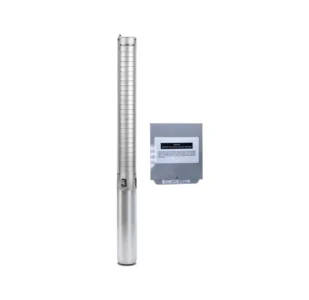
Water pumps are essential in residential, agricultural, and industrial applications, but they can also be significant energy consumers. With rising electricity costs and growing environmental concerns, optimizing water pump efficiency is more important than ever. This article explores practical strategies to reduce power consumption while maintaining performance, helping you save money and lower your carbon footprint.

This article examines the following topics:

Choose the Right Pump for Your Needs – Avoid Oversizing and Undersizing

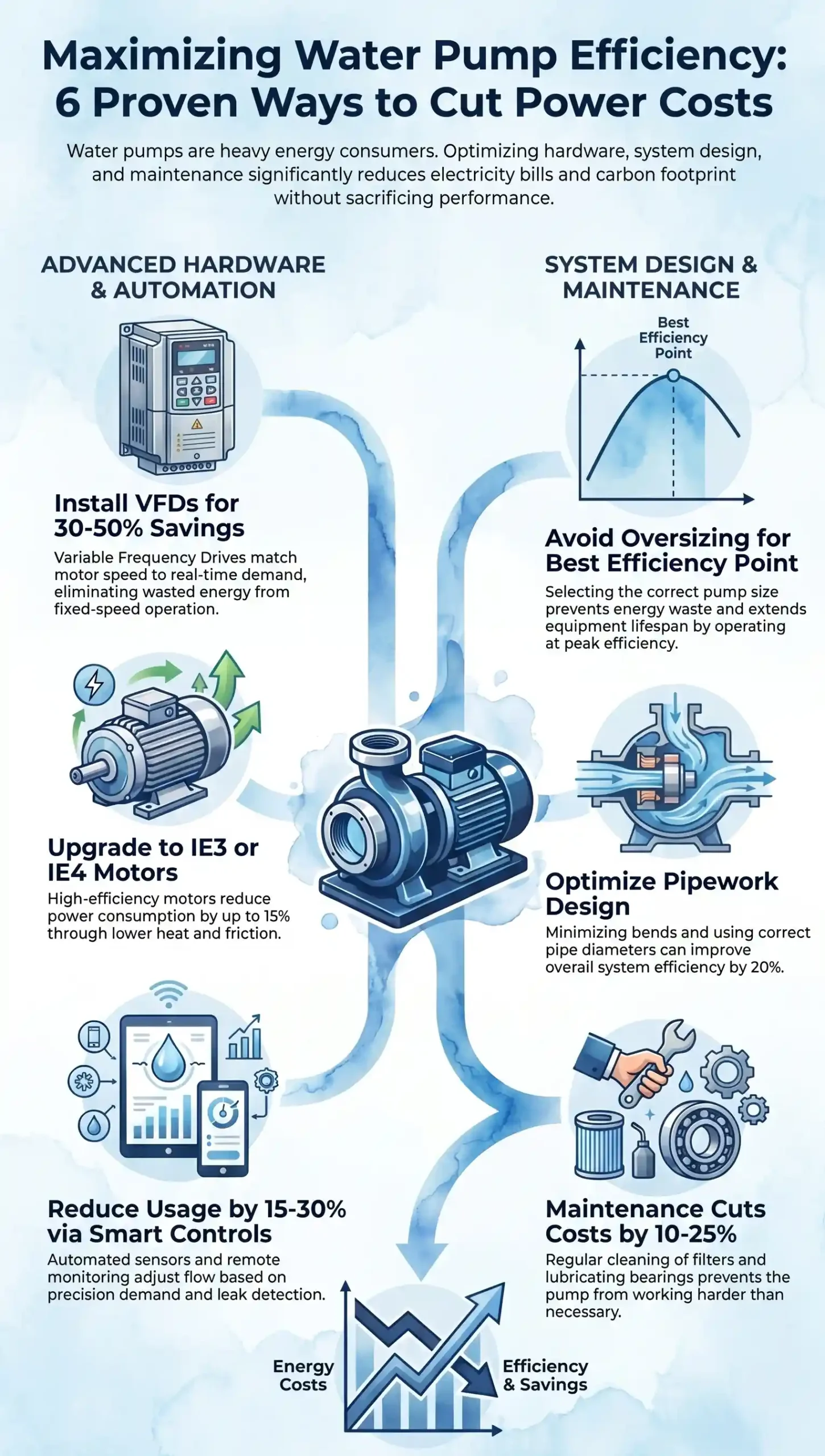
Selecting the correct pump size is crucial for energy efficiency. An oversized pump consumes excess power because it operates outside its best efficiency point (BEP), leading to wasted energy. On the other hand, an undersized pump works harder to meet demand, increasing wear and energy use.

To ensure optimal performance:

  • Calculate your required flow rate (GPM or L/min) and pressure (PSI or bar).
  • Consult pump performance curves to match your needs.
  • Consider multi-stage pumps for high-pressure applications instead of single-stage ones running at maximum capacity.

By choosing the right pump, you prevent energy waste and extend equipment life.

RP Pumps Online makes it easy to buy water pumps online with a wide selection of high-quality and reliable pump solutions. Trusted by professionals and homeowners, we ensure fast delivery and excellent customer support.

Opt for High-Efficiency Motors – IE3 and IE4 Standards for Maximum Savings

Standard motors can waste significant energy through heat and friction losses. High-efficiency motors (IE3 and IE4-rated) minimize these losses, reducing power consumption by 5-15% compared to conventional models.

Key benefits include:

  • IE3 (Premium Efficiency): The minimum standard in many regions, offering substantial energy savings.
  • IE4 (Super Premium Efficiency): Even more efficient, ideal for continuous-duty applications.
  • Lower operating temperatures, reducing wear and maintenance costs.

Upgrading to an efficient motor may have a higher upfront cost, but the long-term savings justify the investment.

Related article: For more information about smart water pump, click the link.

Use Variable Frequency Drives (VFDs) – Smart Speed Control for Energy Savings

Traditional pumps run at a fixed speed, even when demand fluctuates, wasting energy. A Variable Frequency Drive (VFD) adjusts motor speed based on real-time demand, cutting energy use by 30-50%.

How VFDs improve efficiency:

  • Match pump speed to required flow, avoiding throttling losses.
  • Reduce mechanical stress, extending pump lifespan.
  • Soft-start capability, preventing power surges.

VFDs are ideal for systems with varying loads, such as irrigation, HVAC, and industrial processes.

The pumping of water is a basic and practical technique, far more practical than scooping it up with one's hands or lifting it in a hand-held bucket. This is true whether the water is drawn from a fresh source, moved to a needed location, purified, or used for irrigation, washing, or sewage treatment, or for evacuating water from an undesirable location. Regardless of the outcome, the energy required to pump water is an extremely demanding component of water consumption. All other processes depend or benefit either from water descending from a higher elevation or some pressurized plumbing system.

Implement Proper Pump Sizing and Maintenance – Keep Your System Running Efficiently

A poorly maintained pump consumes more energy and fails sooner. Regular maintenance ensures peak efficiency:

  • Check for clogged filters – Dirty filters increase resistance, forcing the pump to work harder.
  • Inspect impellers – Worn or damaged impellers reduce flow efficiency.
  • Monitor seals and bearings – Leaks and friction increase energy use.
  • Lubricate moving parts – Reduces mechanical losses.

Preventive maintenance schedules can cut energy use by 10-25% and prevent costly breakdowns.

Water Pumps

Optimize Pipework Design – Reduce Friction and Pressure Losses

Poorly designed piping systems force pumps to overcome unnecessary resistance, wasting energy. Key optimization strategies:

  • Use the right pipe diameter – Too small increases friction; too large increases costs.
  • Minimize bends and elbows – Each 90° bend adds pressure loss.
  • Avoid excessive pipe length – Shorter runs reduce friction losses.
  • Insulate pipes in cold climates – Prevents heat loss and freezing.

A well-designed system can improve efficiency by 20% or more.

Consider Solar-Powered Water Pumps – Renewable Energy for Off-Grid Solutions

For remote locations or sustainable operations, solar-powered pumps eliminate electricity costs and reduce carbon emissions.

Advantages include:

  • No grid dependency – Ideal for farms, rural areas, and eco-friendly projects.
  • Low operating costs – Sunlight is free, unlike rising electricity prices.
  • Minimal maintenance – Fewer moving parts than conventional pumps.

Modern solar pumps are reliable and can be paired with battery storage for 24/7 operation.

Automate Pump Operations with Smart Controls – Precision and Energy Savings

Smart technology optimizes pump performance by adjusting operations based on demand. Benefits include:

  • Automated flow control – Sensors adjust speed to match real-time needs.
  • Leak detection – Alerts for inefficiencies or malfunctions.
  • Peak load management – Schedules pumping during low-tariff hours.
  • Remote monitoring – Real-time data for better decision-making.

Automation can reduce energy consumption by 15-30% while improving system reliability.

Conclusion

Reducing power consumption in water pumps is achievable through proper selection, maintenance, and smart technology. By implementing high-efficiency motors, VFDs, optimized piping, and renewable energy solutions, you can cut energy costs significantly while supporting sustainability.  Start applying these strategies today to maximize efficiency, save money, and reduce environmental impact.

FAQs

What’s the difference between IE3 and IE4 motors?
  • IE3 (Premium Efficiency): The minimum efficiency standard in many regions, offering significant energy savings over standard motors.
  • IE4 (Super Premium Efficiency): Even more efficient, reducing losses by 15-20% compared to IE3, ideal for continuous-duty pumps.

Poor piping increases friction loss, forcing pumps to work harder. Optimize by:

  • Using correct pipe diameter (avoid too narrow/wide)
  • Minimizing sharp bends and long runs
  • Insulating pipes in cold climates
  • Clean filters regularly (clogs increase energy use)
  • Check impellers and seals (wear reduces performance)
  • Lubricate bearings (reduces friction losses)
  • Monitor for leaks (pressure loss wastes energy)

Leave a Reply

Your email address will not be published. Required fields are marked *